
How Local Data Reveals the Gaps in Manual Gambling Enforcement
Every gambling regulator knows illegal gambling websites exist. They know unauthorized operators compete with licensed businesses, operate outside regulatory oversight, and create risks for consumers and government revenue.
Many regulators try to identify and restrict access to illegal gambling websites by maintaining blocklists. But with new websites constantly emerging and existing operators changing domains, keeping those lists comprehensive and up to date is a significant challenge. There’s a difference between knowing illegal gambling is a problem and seeing just how much your current enforcement efforts may be missing.
The turning point comes when regulators see the evidence in their own data.
That’s when the scale of the challenge becomes clear, along with a fundamental reality: the internet is simply too big and changes too quickly to manage through manual website discovery alone.
The Problem with Manual Blocklists
A blocklist tells you what you know. It doesn’t tell you what you’re missing.
For many gambling regulators, the challenge begins before a single website is blocked. While they may have the authority to restrict illegal gambling websites, they often lack the technical tools and infrastructure needed to effectively implement those restrictions.
Even when regulators have blocking capabilities in place, identifying and maintaining an accurate list of unauthorized websites presents another significant challenge.
New gambling domains can appear at any time. Existing operators can change web addresses, introduce alternative domains, or redirect users to new sites. Manually identifying, verifying, and updating blocklists is an ongoing process that struggles to keep pace with the internet.
The scale of the challenge is significant.
Our data shows that recorded gambling-related URLs increased from approximately 3.7 million in November 2025 to 12.6 million in October 2026, highlighting the scale of online gambling activity that regulators must contend with. – Netsweeper Statistics
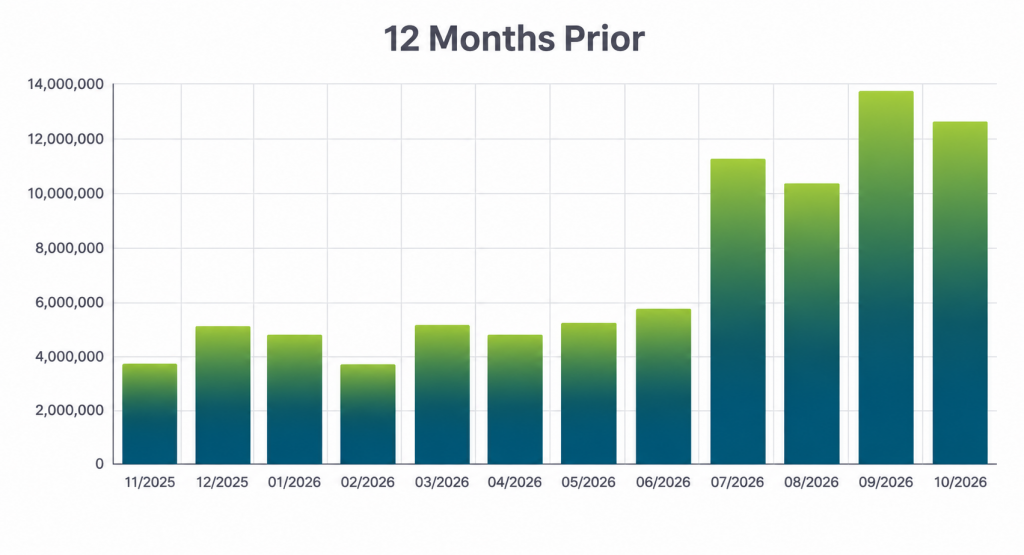
This volume of activity highlights the challenge regulators face in identifying and addressing unauthorized online content. Even with dedicated resources, manually discovering and maintaining a comprehensive list of websites is a significant undertaking.
But the problem isn’t always obvious. A regulator may have thousands of websites on its blocklist and believe it has substantial coverage. Yet the number of sites already identified doesn’t reveal how many remain undiscovered, or whether the regulator has the tools needed to effectively restrict access to them.
What Changes When Regulators See Their Own Data?
This is where a proof of value can make a difference. Rather than simply presenting a regulator with another list of potentially illegal gambling websites, we can demonstrate what additional website discovery and classification reveal about the regulator’s own market.
By analyzing local network logs and comparing identified gambling-related domains against existing blocklists, regulators can begin to see the gaps in their current approach.
The results can answer important questions:
- Which gambling websites are appearing in local network activity?
- How many are already known to the regulator?
- Which potentially unauthorized websites are missing from existing blocklists?
- What does this reveal about the effectiveness of manual discovery?
The objective isn’t just to identify additional websites. It’s to demonstrate, using evidence relevant to the regulator’s own country, why manual processes alone cannot provide comprehensive visibility.
What the Data Revealed: Two Real-World Examples
What happens when regulators move beyond their existing blocklists and examine actual network activity in their own markets?
Through our proof-of-value assessments in two Latin American markets, we’ve seen firsthand just how much information can be uncovered, even when analyzing relatively small groups of internet users.
The findings highlighted three important challenges: the volume of daily gambling-related requests, differences in activity between weekdays and weekends, and the discovery of previously unknown gambling websites.
Example 1: Thousands of Gambling Domains in a Single Day
In one Latin American market, we analyzed gambling-related network activity across a population of approximately 100,000 fixed-line internet users. The results demonstrated the scale of the monitoring challenge.
On January 14th of 2026, the assessment recorded 116,239 gambling-related requests across 1,471 distinct domains. Just four days later, on January 18, the figures had increased to 133,359 requests across 1,572 distinct domains.
These results represent only a limited portion of the market, yet they reveal the volume of gambling-related activity that regulators may need to understand and assess.
The findings also showed differences in activity across the reporting days, reinforcing the importance of ongoing monitoring rather than relying on a single snapshot.
Example 2: Discovering What Existing Processes Miss
In a second Latin American market, we conducted a proof-of-value assessment using local network data from approximately 20,000 fixed-line internet users.
Despite the relatively small sample, the analysis revealed a significant volume of gambling-related activity, including previously unknown gambling websites that existing monitoring processes had not identified.
The assessment also highlighted differences in activity between weekdays and weekends, demonstrating how online gambling patterns can change over time and why a single snapshot may not provide a complete picture.
For the regulator, seeing this information from its own market was particularly impactful. Rather than relying on general industry statistics or lists of websites from elsewhere, it could see firsthand the scale of activity and the limitations of its existing visibility.
The key takeaway wasn’t simply how many gambling websites were identified. It was how much could be uncovered from a relatively small sample of local network data, and what that suggested about potential gaps across the wider market.
What These Results Mean for Regulators
Both assessments highlighted the same underlying challenge. Even within relatively small network populations, the number of gambling-related requests and domains can be substantial. Activity changes from day to day, and previously unknown websites can emerge.
For regulators relying on manual identification, this creates an enormous challenge. The internet is simply too large and changes too quickly for manual discovery alone to provide comprehensive visibility.
The turning point comes when regulators see this reflected in their own data.
Rather than relying on general estimates or lists of websites from other markets, they can see the scale of the challenge directly and understand why more automated, continuous discovery capabilities are needed.
Why the Internet Moves Faster Than Manual Enforcement
These examples point to a much larger issue. Manual blocklists are inherently reactive. A website must be discovered before it can be investigated and added to an enforcement list, but the internet doesn’t wait for that process to finish.
New websites appear. Domains change. Operators adapt. By the time one list is updated, the online landscape may already have changed. Simply adding more people to the process doesn’t solve the underlying problem. Regulators need technology that can support website discovery and classification at a scale that manual methods cannot realistically match. The answer isn’t just a bigger blocklist. It’s a better way to keep that blocklist current.
From Manual Discovery to Continuous Visibility
Automated website discovery and classification can help regulators address the limitations of manual enforcement. Rather than relying exclusively on websites identified through individual investigations, regulators can use technology to support ongoing identification of gambling-related domains.
This can help them:
- Identify potential enforcement gaps: Discover websites that may be missing from existing blocklists.
- Keep pace with change: Identify new and changing domains as they appear.
- Reduce manual workload: Focus regulatory resources on reviewing findings and making enforcement decisions rather than searching for every website individually.
- Improve enforcement coverage: Maintain more complete and current information about potentially unauthorized operators.
- Protect the regulated market: Support more effective action against unauthorized websites operating outside established regulatory requirements.
Technology doesn’t replace regulatory authority or human judgment. It gives regulators the visibility needed to make better-informed decisions.
Proving the Value with Local Data
For regulators considering a more scalable approach, a proof of value offers a practical starting point.
Through a limited, log-only assessment conducted with a cooperating local internet service provider, Netsweeper can help regulators understand what their own network data reveals.
The assessment can focus on identifying gambling-related domains, comparing them against existing blocklists, and highlighting potential gaps for further investigation.
It doesn’t require regulators to begin with a full enforcement deployment. Instead, it gives them an opportunity to evaluate the technology using evidence relevant to their own market, subject to appropriate privacy and data protection safeguards.
Because seeing real examples of what existing processes may be missing can be far more meaningful than reviewing another list of URLs.
How Netsweeper Helps Regulators Keep Pace
Netsweeper provides website discovery, classification, and filtering technology designed to help organizations identify and manage online content at scale.
For gambling regulators, these capabilities can support the identification of potentially unauthorized gambling websites and help strengthen existing enforcement strategies.
By combining automated website intelligence with local network evidence, Netsweeper helps regulators better understand where their current approach may be falling short.
The regulator determines which operators are authorized and what enforcement actions are appropriate. Netsweeper provides the technology to support those decisions and implement authorized controls.
The Turning Point Is Seeing What You’ve Been Missing
For gambling regulators, the challenge isn’t a lack of awareness that illegal gambling exists.
It’s understanding how much of the problem remains outside their current view.
Manual blocklists are an important enforcement tool, but the size and speed of the internet make comprehensive manual discovery increasingly difficult.
A proof of value can make those limitations visible. And when regulators see the evidence in their own data, the conversation changes. It becomes less about whether unauthorized gambling websites exist and more about how to identify and address the ones that have been missed.
Because you can’t enforce against what you can’t see.
Want to know what your existing blocklists may be missing? Contact Netsweeper to explore how a local proof of value can help reveal enforcement gaps and support more effective illegal gambling regulation.