
Blocking illegal gambling websites is an important step in protecting a regulated market. But what happens when new websites appear faster than regulators can identify and block them?
For gambling regulators, website blocking has become an established tool for restricting access to unauthorized operators. However, the process is largely manual. Regulators must identify illegal websites, review them, and submit them for blocking through the appropriate channels. Even then, regulators may not have direct control over when or whether internet service providers implement the restrictions, creating potential delays between identifying an illegal website and preventing access to it.
The process is straightforward in principle. The challenge is that the illegal gambling market does not stand still.
New domains appear. Existing operators change web addresses. Mirror websites emerge. And by the time a regulator identifies a website, completes the necessary legal process, and implements a block, the market may have already changed.
This raises an important question: Is maintaining a list of illegal gambling websites enough to enforce a regulated market? The answer depends on what happens between blocking actions.
Denmark’s 178-Site Court Order Shows Both Progress and the Challenge
In June 2025, Denmark’s gambling regulator, Spillemyndigheden, secured a court ruling to block 178 illegal gambling websites. It was the largest number of websites blocked in a single action since the country began using the measure in 2012.
The action demonstrated Denmark’s commitment to protecting its licensed gambling market and limiting access to unauthorized operators. But it also highlighted the scale of the problem.
If 178 illegal gambling websites can be identified in a single enforcement action, how many additional websites are operating outside the regulator’s visibility? How many new domains will appear before the next round of blocking?
These questions do not diminish the value of Denmark’s enforcement efforts. They demonstrate why website blocking must be supported by continuous discovery and monitoring.
Denmark’s own approach has evolved in recognition of this challenge. The regulator moved from pursuing website blocking once a year to twice a year, allowing it to respond more frequently to illegal operators.
More frequent blocking is progress. But even an updated blocklist remains dependent on which websites have already been discovered. A blocklist tells a regulator what has been identified. It does not necessarily reveal what is still being missed.
The Problem with Static Blocklists
A traditional blocklist is built around known websites.
Once a regulator identifies an unauthorized gambling domain, that website can be reviewed, classified, and added to the appropriate enforcement process. This works for websites that have already been discovered. The limitation is everything that happens afterward.
Illegal gambling operators can register new domains, redirect visitors to alternative websites, or establish mirror sites that provide access to the same gambling services.
A blocklist that was accurate yesterday may not represent the illegal gambling market today. For regulators relying heavily on manual investigations, public reports, or periodic website reviews, this creates a continuing gap between what is known and what is actually available to consumers.
The issue is not simply the number of websites on a blocklist. It is the speed at which new illegal gambling activity can be discovered, assessed, and addressed.
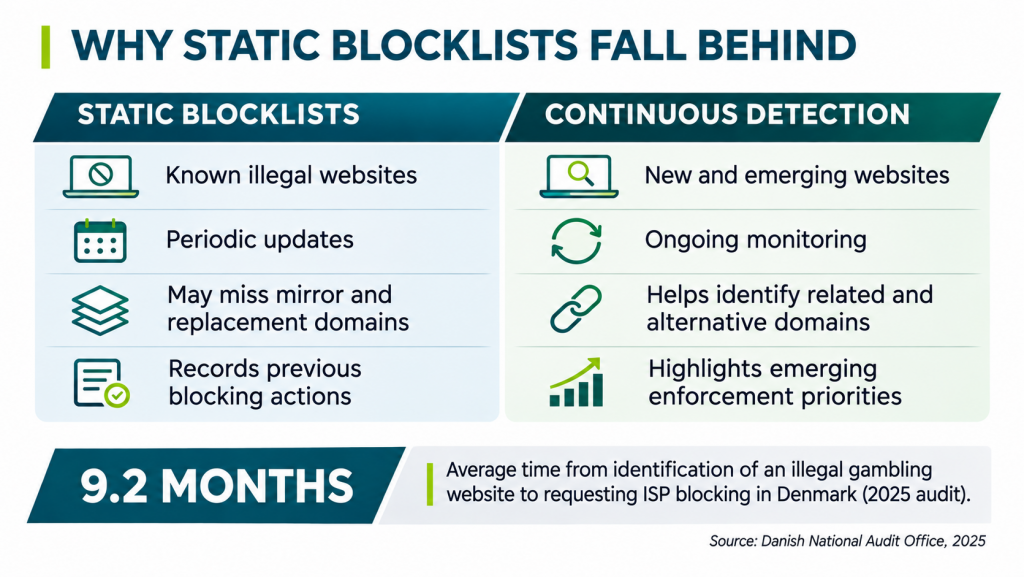
Static blocklists identify known illegal gambling websites, while continuous detection helps regulators discover emerging threats and prioritize enforcement.
Why Detection Needs to Continue After a Website Is Blocked
Blocking a known illegal website is an enforcement action. But effective market protection requires more than completing individual blocking actions.
It requires a continuous process of identifying unauthorized operators, reviewing new websites, and determining whether existing enforcement measures remain effective. This is where live, ongoing detection changes the picture.
Rather than relying exclusively on previously identified domains, continuous website discovery and classification can help regulators identify emerging gambling websites and evaluate whether they may be operating without authorization.
It also creates opportunities to recognize patterns that static lists may miss, including related domains, mirror websites, and changes in how unauthorized operators reach consumers.
The distinction matters because illegal gambling enforcement is not a one-time exercise. The objective is not simply to block the websites a regulator knows about. It is to keep identifying the websites that should not be operating in the market.
Latvia Raises Another Important Question: What Happens When a Block Is Challenged?
Latvia provides another perspective on the importance of accuracy and accountability in website blocking. The country has used website restrictions against unlicensed online gambling operators since 2014. Its approach also illustrates why blocking decisions must be supported by clear regulatory authority and reliable information.
Website blocking can have consequences beyond preventing access to a gambling platform. Consumers may have funds deposited with an operator, while website owners may challenge a restriction. Reports from Latvia’s early blocking programme described objections from players who could no longer access websites holding their deposits.
These concerns do not mean regulators should avoid blocking illegal gambling websites. They mean regulators need to be confident in the information behind their decisions and have visibility into how those decisions are implemented. Netsweeper’s technology provides an audit trail, allowing regulators to verify whether a block has been implemented, when it was put in place, and by whom. This provides greater transparency, accountability, and oversight throughout the enforcement process.
A website must be assessed against the licensing requirements and laws of the relevant jurisdiction. A gambling website operating legally in one country may not be authorized to target consumers in another.
Accurate website classification, supporting evidence, and a clear review process are therefore essential.
Effective enforcement requires both speed and accuracy. Regulators need to identify unauthorized operators quickly without losing the ability to justify their decisions.
From Maintaining a List to Protecting a Market
For regulators, the real opportunity is to move beyond treating blocklist maintenance as the primary measure of enforcement success.
A growing blocklist may demonstrate that more websites are being identified. But it does not necessarily show whether fewer consumers are reaching unauthorized gambling operators.
A more useful approach combines continuous detection, website classification, targeted blocking, and ongoing measurement.
This gives regulators the ability to answer more meaningful questions:
- Are new illegal gambling websites appearing in the market?
- Are previously blocked operators returning through alternative domains?
- Which unauthorized websites are attracting traffic from consumers in the country?
- Are blocking measures reducing access to illegal gambling services?
- Where should enforcement resources be focused next?
These are questions that a static blocklist alone cannot fully answer.
And they are essential for regulators seeking to protect consumers, support licensed operators, and safeguard the integrity of their regulated gambling markets.
How Netsweeper Supports Continuous Detection and Enforcement
This is where Netsweeper’s website discovery and classification technology can help regulators move from reactive blocking toward more proactive market protection.
Rather than relying solely on a fixed list of previously identified gambling websites, Netsweeper helps regulators discover and classify websites that may be offering unauthorized gambling services.
By combining ongoing website intelligence with relevant local network data, where available and legally permitted, regulators can gain a clearer understanding of the gambling websites being accessed within their own market.
This can help identify websites that existing blocklists have missed, highlight potential enforcement priorities, and provide supporting information for further regulatory investigation.
Importantly, Netsweeper does not replace the regulator’s responsibility to determine whether a website is operating illegally.
It provides the technology and intelligence that support those decisions and help regulators implement appropriate controls. Through dashboards, reports, and detailed audit trails, regulators can monitor illegal gambling activity, identify emerging enforcement priorities, track blocking actions, and verify whether restrictions have been implemented. This gives regulators greater visibility into the effectiveness of their enforcement efforts while supporting informed decision-making, transparency, and accountability.
The result is a more informed approach to enforcement, where website blocking is part of a continuous process rather than the final step in an occasional investigation.
Enforcement Should Not Stop When the List Is Updated
Denmark’s 178-site court order and Latvia’s experience highlight the importance of moving beyond static blocklists toward continuous, accountable enforcement.
To effectively protect a regulated gambling market, regulators need to:
- Discover new illegal gambling websites before they go unnoticed for extended periods.
- Identify returning operators using mirror sites and alternative domains.
- Monitor market activity to identify emerging threats and prioritize enforcement.
- Verify blocking actions through audit trails that show if, when, and by whom restrictions were implemented.
- Measure enforcement effectiveness through dashboards and reports that provide ongoing visibility into market activity.
A blocklist records what a regulator has already found. Continuous detection helps reveal what needs attention next. That is the difference between maintaining a blocklist and actively protecting a regulated market.
Learn how Netsweeper’s Illegal Online Gambling Solution can support website discovery, classification, and more effective regulatory enforcement